
Client Acquisition
What Is SEO, and How Does It Generate Leads for a Small Business?
Quick answer
SEO is how your business gets found when someone searches for what you sell. It generates leads because those people already have the problem. Answer their questions on clear pages, give each page a next step, and follow up fast.
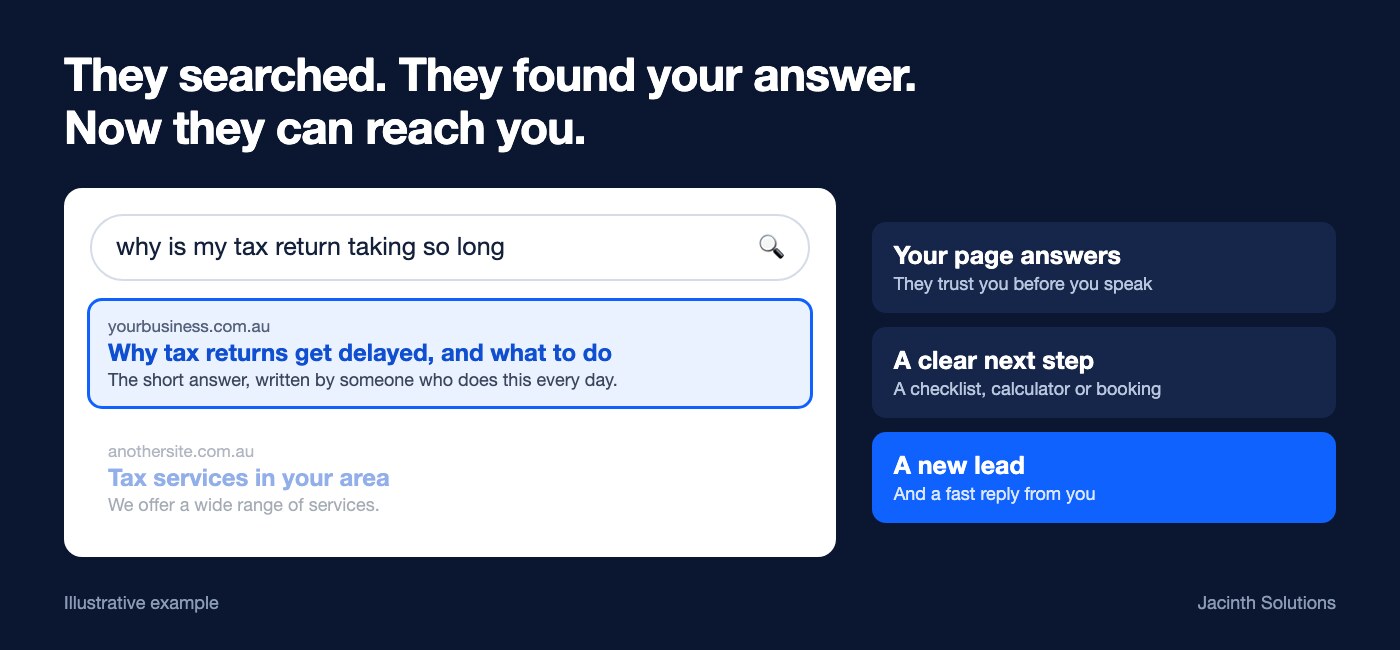
SEO (search engine optimisation) is how your business gets found when someone searches for what you sell. It generates leads because those people already have the problem and are looking for an answer right now. You publish pages that answer their questions, Google and AI search tools show those pages, and a clear next step on each page turns the reader into an enquiry.
Why does SEO matter to a small business?
Think about the last time you needed a plumber, an accountant or a dentist. You probably searched for one. Your customers do the same thing, and they either find you or they find someone else.
Three things make search different from other marketing:
- The buyer comes to you. An ad interrupts someone. A search result answers a question they already asked.
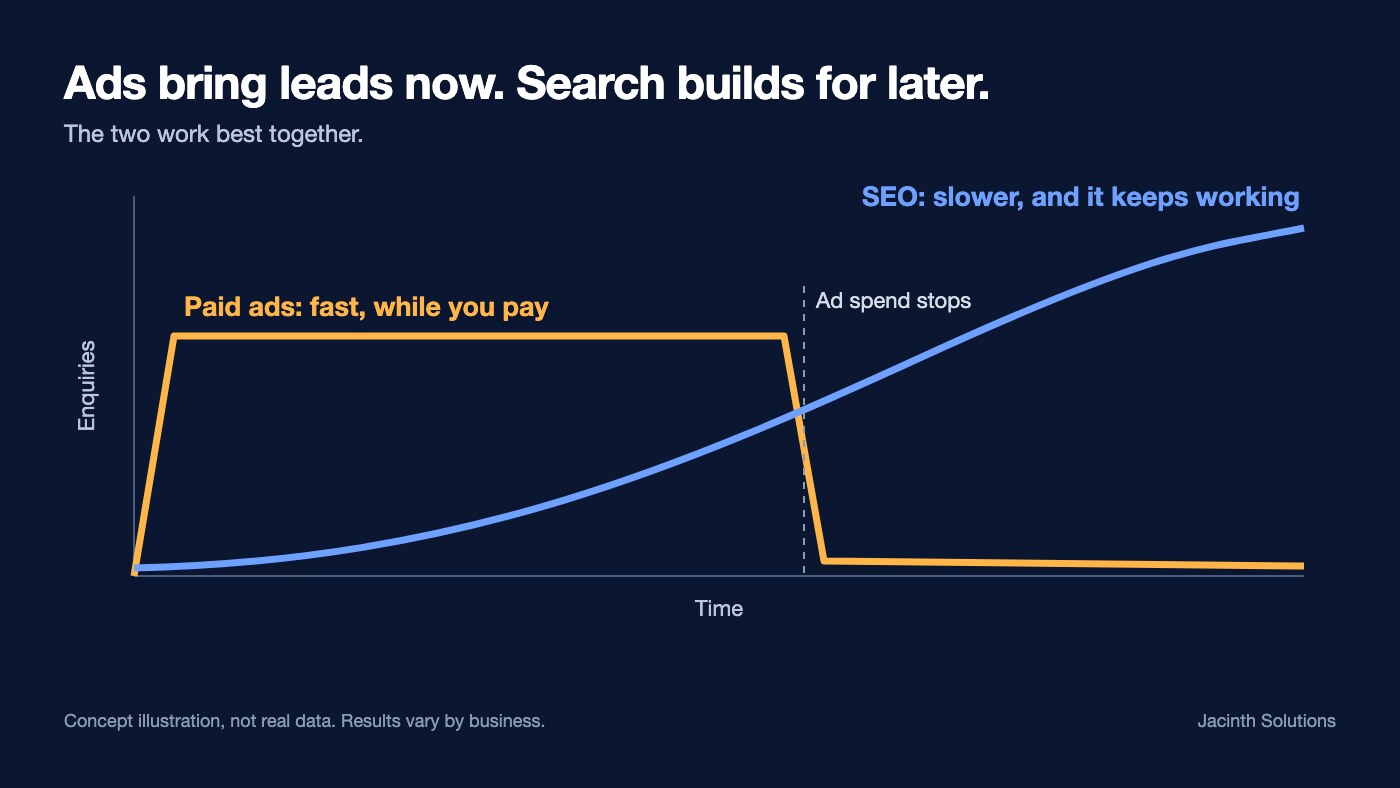
- The work keeps paying. When you stop paying for an ad, it disappears. A good page can keep bringing people in long after you wrote it.
- It builds trust before you speak. Someone who has read your clear answer to their question arrives already knowing how you think.
How does SEO actually turn into leads?
Traffic alone pays no bills. SEO produces leads when these five steps are joined up:
- Find the questions. List what customers ask before they buy, in their words. Your phone calls and emails are the best source.
- Answer each one on its own page. One page, one question, with the answer in the first few lines.
- Help search engines read it. Clear titles, headings, fast pages and links between related pages.
- Give the reader a next step. A calculator, a checklist or a booking link, so an interested reader becomes a contact you can talk to.
- Follow up fast. Send the new lead a reply straight away, then keep in touch until they are ready to buy.
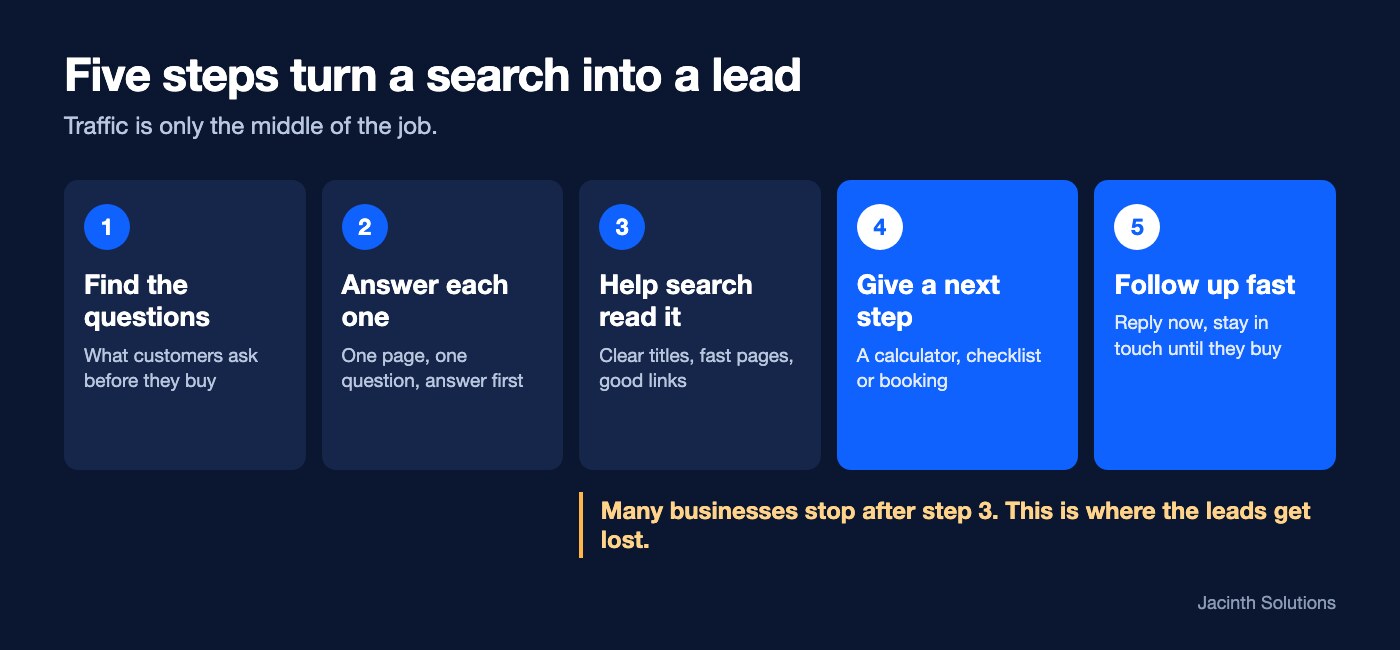
Most businesses that say SEO did not work stopped at step three. They got visitors, then gave those visitors nothing to do and nobody to talk to.
What should a local business fix first?
Start with your Google Business Profile. It is free, and it is what appears when someone searches for your service nearby. Google says local results depend mainly on relevance, distance and prominence. You cannot move your shop, but you can fill in your details completely, keep them accurate and ask happy customers for reviews.
Then write one page for each main service and each area you truly serve. Say what you do, who it suits and how to get started.
How long does SEO take?
Expect months, not days. Nobody can honestly promise a ranking or a date, because how quickly you move depends on your competitors, your website and how consistently you publish. That is why many businesses run ads for leads now while they build search for leads later. The two work well together: ads show you which messages make people act, and those messages tell you what to write about.
Does SEO still matter now that people ask AI?
Yes. People now ask tools like ChatGPT and Google's AI answers the same questions they used to type into a search box. Those tools need good pages to draw from. The basics are the same: answer a real question directly, be clear about who you are, and back up your claims. A page written that way can serve both kinds of search.
Can you do SEO without a big team?
This used to be the hard part. Consistent SEO meant research, writing, formatting, publishing and connecting every page to your follow-up, usually across several people and tools.
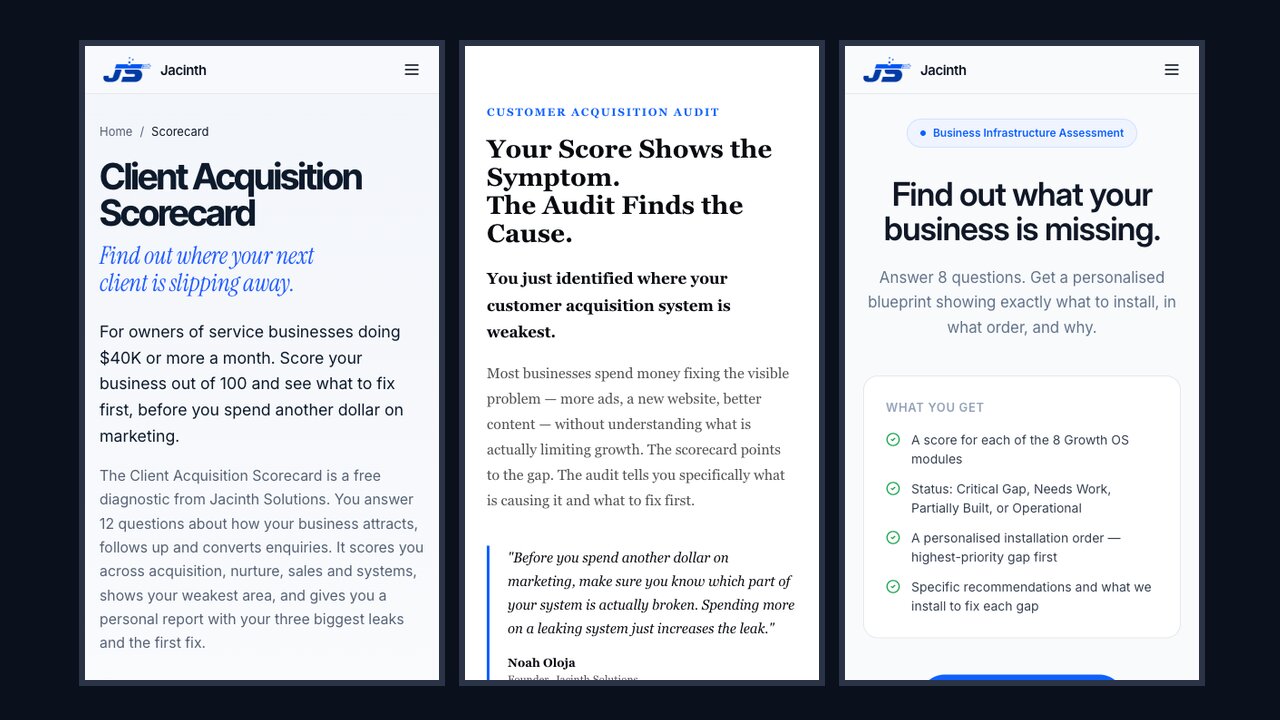
AI has changed the effort involved. At Jacinth Solutions, we use one connected system to research, draft and publish articles like this one, then link each article to the forms and follow-up that handle the enquiry. A person still decides what to say and checks that it is true. AI can write quickly, but your experience is what makes a page worth reading.
Where should you start this week?
- Write down the ten questions customers ask you most often.
- Update your Google Business Profile.
- Publish a clear answer to your most common question, with one next step at the bottom.
- Make sure every enquiry gets a fast reply.